Benn-Ibler Law Firm Hosts Pioneering ‘Understanding AI’ Workshop: Law Students Explore Artificial Intelligence in Practice | #LegalTech Wien
Vienna, , 17 February 2026
Workshop: Understanding Artificial Intelligence — Essential Concepts for Contemporary Law Students"
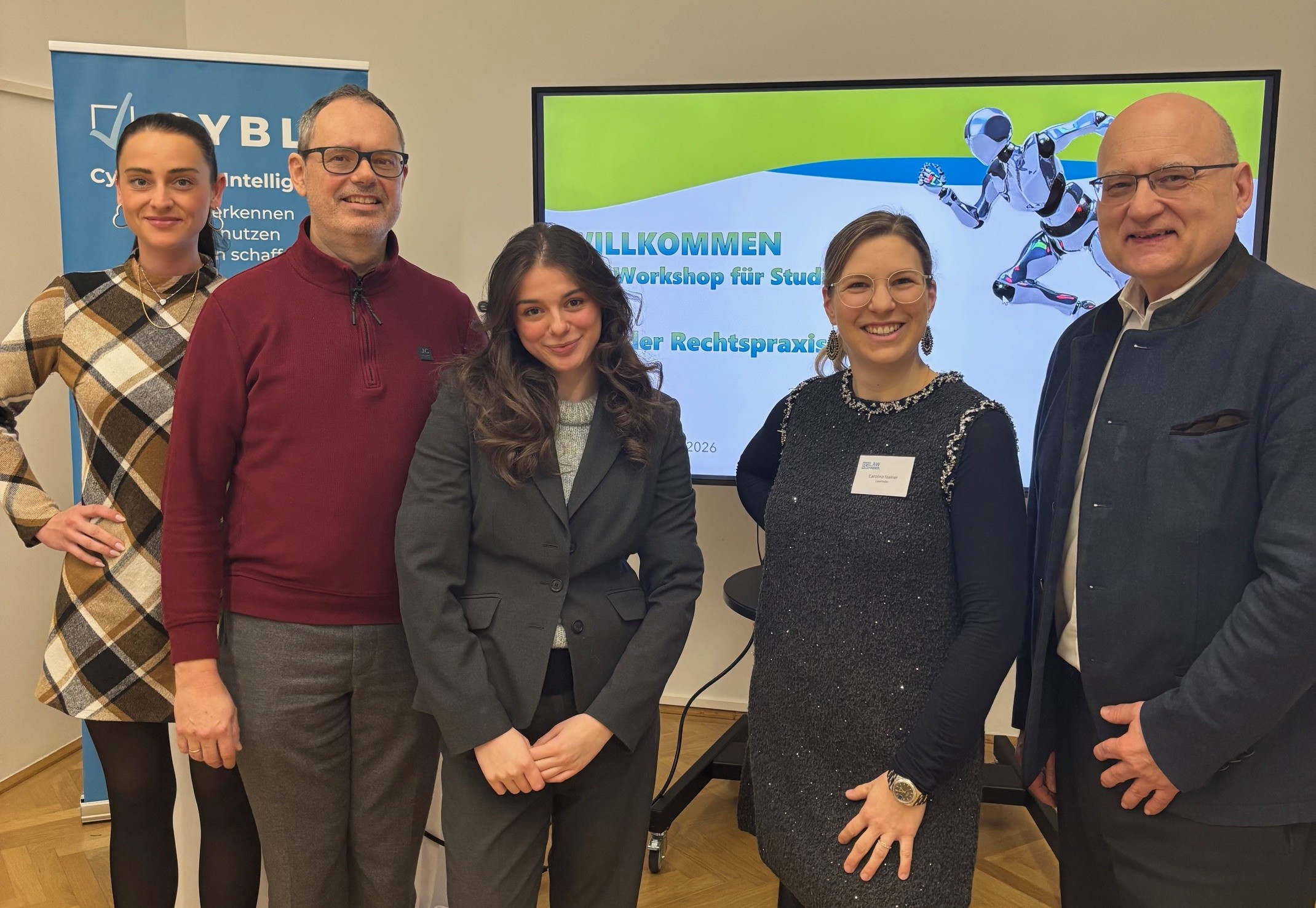
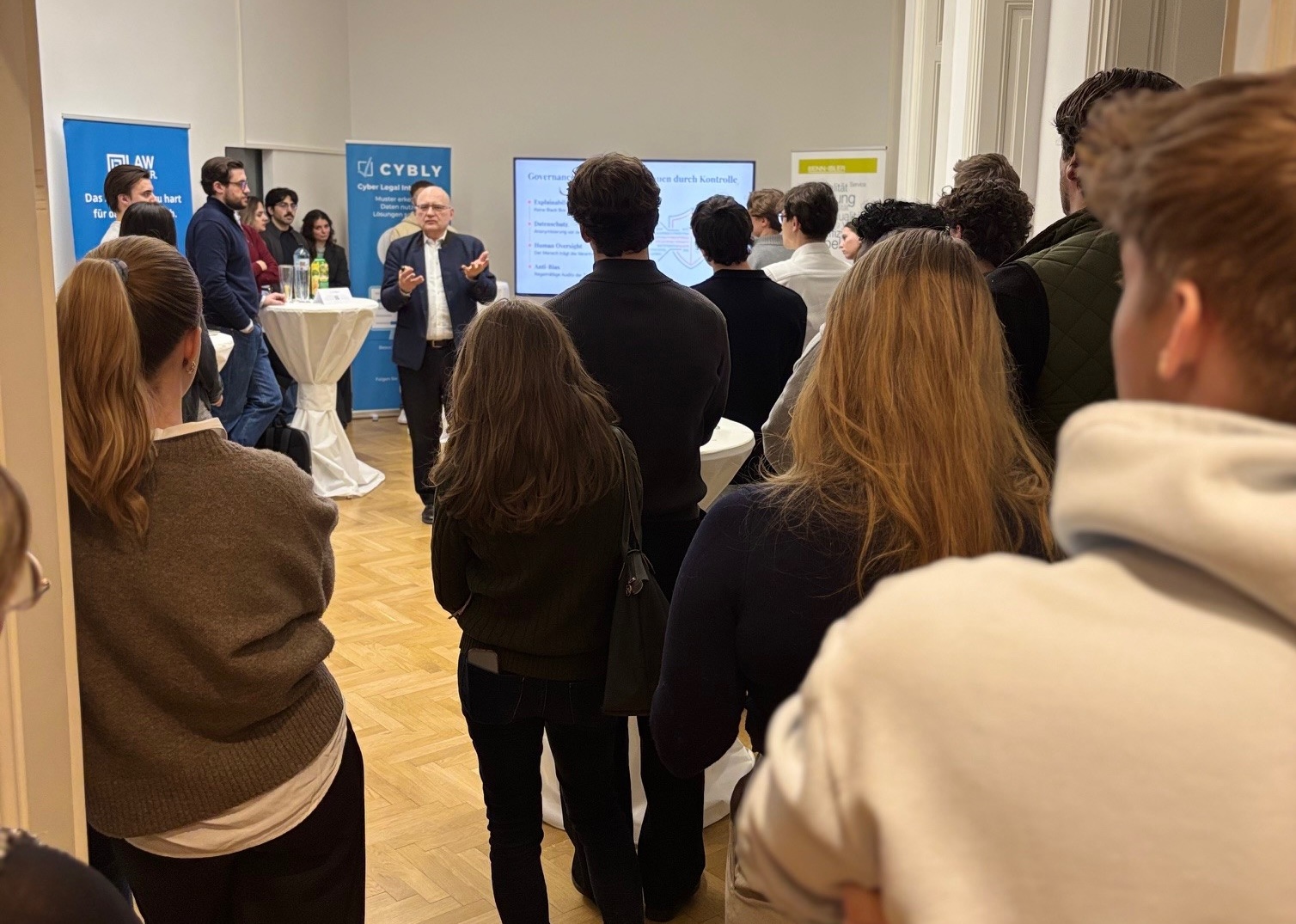
Artificial intelligence is currently reshaping the legal profession, representing more than just a future possibility. On Tuesday, February 17, 2026, Benn-Ibler, together with Cybly and LawFinder, hosted a workshop entitled Understanding AI: How Law Students Can Already Use AI Today at Schreyvogelgasse 3 in Vienna, Austria. During this two-hour event, students, legal practitioners, and technology experts participated in discussions exploring both the capabilities and limitations of artificial intelligence, highlighting the significance of distinguishing these aspects within the rapidly evolving context of legal practice.
AI is Statistics, not Magic.
The principal and arguably most consequential takeaway from the evening is both simple and profound: AI generates predictions based on likely subsequent words or syllables rather than ensuring factual accuracy. Understanding this fundamental distinction allows individuals to approach AI-generated texts, summaries, or research with the necessary critical evaluation. For legal professionals, whose work relies on accuracy and reliability, acknowledging this difference is not just a technical nuance but an essential component of their professional duty.
The distinction between Large Language Models (LLMs) and traditional databases is substantial: LLMs are not designed to operate as databases. They do not possess persistent data storage functionalities and cannot update their knowledge in real time, as the information within an LLM remains fixed post-training. In legal settings, this limitation means that queries regarding current statutes or requirements may result in outdated or confabulated responses from an LLM. For dependable automation and workflow integration, it is essential to utilise structured and rigorously managed data sources.
Compound AI: When Systems Working Together Deliver Better Results Than Individuals
A key focus of the workshop was the principle of Compound AI—the strategic integration of multiple systems to establish a robust and effective solution. The implementation of Legal AI necessitates coordinated interaction among specialised components:
LLMs as Interfaces: These models facilitate communication in natural language, effectively translating complex legal inquiries for integration with downstream systems.
Structured Knowledge Base: Knowledge graphs deliver dependable and current information, including statutes, rulings, and internal firm data.
Rule Engines: These systems perform logical validations and maintain consistency and traceability of outcomes.
Achieving success in Legal AI depends not solely on deploying the most advanced models, but rather on a strategic integration of structured legal data, meticulously managed workflows, and proficient professionals who leverage AI to improve the quality and efficiency of legal services. This principle embodies the approach at Benn-Ibler, where legal expertise is enhanced through judicious use of digital technologies.
AI Literacy: A Legal Obligation and Practical Imperative
The implementation of the EU‘s AI Act has elevated AI competency to a legal imperative. The workshop underscored that proficiency in AI is essential for legal practitioners, serving as a foundational requirement for the responsible and effective utilization of AI-based tools. An understanding of how such systems generate results is crucial for critically assessing outcomes and accurately representing them in front of clients or judicial bodies.
Risk management and adherence to ethical guidelines were also discussed, with particular attention given to functional, operational, and legal risks. Recommended strategies for mitigating these risks included the implementation of human oversight mechanisms, maintaining consistent transparency, and conducting regular audits alongside established feedback loops to facilitate ongoing system improvement.


Transforming Legal Education: Advancing from Passive Learning to Practical Application
The workshop was specifically designed for law students. Legal education should transition from passive knowledge dissemination towards active application within digital contexts. Two specific opportunities were thoroughly outlined:
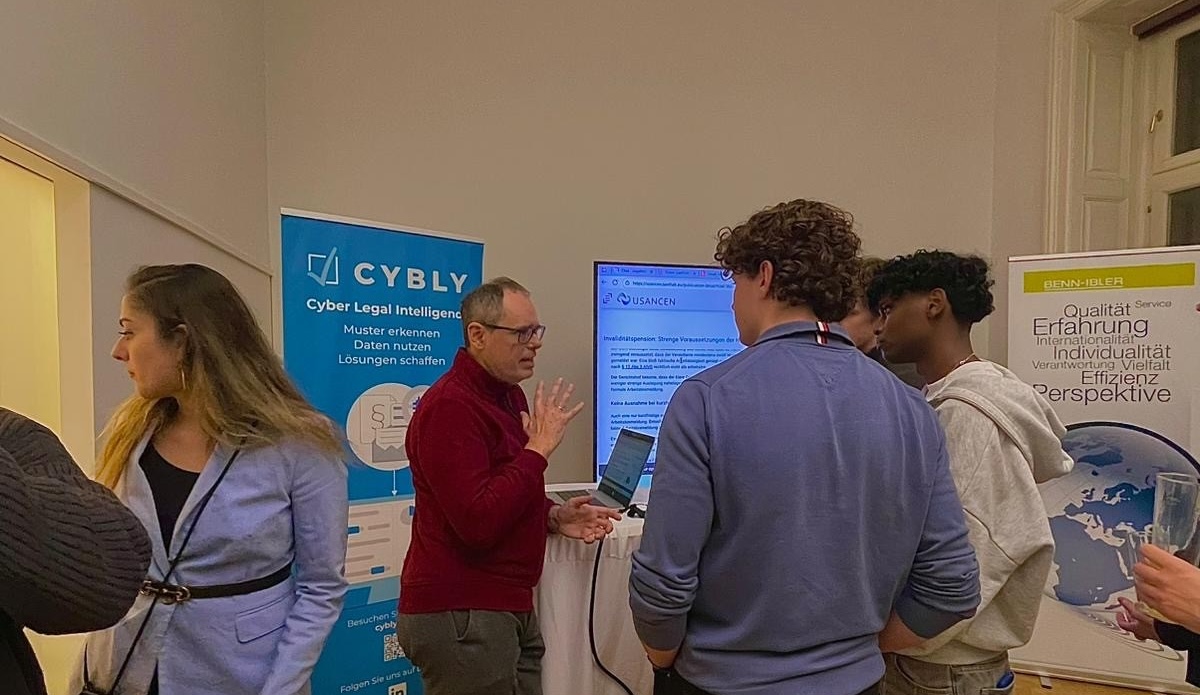
Interactive AI Mentor – LegalNetics AI by Cybly offers students the opportunity to simulate complex legal cases in real time, systematically enhance their legal argumentation skills, and receive prompt feedback. The AI serves as an effective sparring partner for experiential learning.
2026 ReMeP Law As Code Hackathon – This innovative event provides interdisciplinary teams from law, IT, and linguistics with the chance to collaboratively address genuine legal challenges. Interested students are invited to register until the end of February 2026 at ReMeP.
Conclusion: Effective Transformation Requires Both Technological Innovation and Competent Expertise
The workshop reaffirmed Benn-Ibler’s core principles: integrating business law with digitalization as an ongoing, practical commitment rather than a fleeting trend. Implementing AI within legal practice signifies both structural and cultural change. True success is attained not by indiscriminate adoption of advanced models, but through the thoughtful integration of structured legal data, well-established workflows, and the informed judgment of seasoned professionals.
For students, this implies that individuals who view artificial intelligence as a tool to augment their legal reasoning will be suitably equipped for the evolving landscape of legal practice. For companies and clients requiring legal counsel in a digital setting, the event underscored that Benn-Ibler engages not only in discussions about digitalization but also plays a proactive role in advancing it.
Internships & Careers at Benn-Ibler
We invite individuals seeking comprehensive experience in business law and digitalization to explore opportunities with us.
Benn-Ibler - Careers at Benn-Ibler | Benn-Ibler Rechtsanwälte GmbH and Cybly - Cybly GmbH, LegalTech IT-Solutions are currently inviting applications from motivated and talented candidates. We welcome unsolicited applications from individuals seeking to advance their professional careers.
